Sledgehammer Your Excuses: The Government Just Doubled the Money, Permission to Fix the Roof
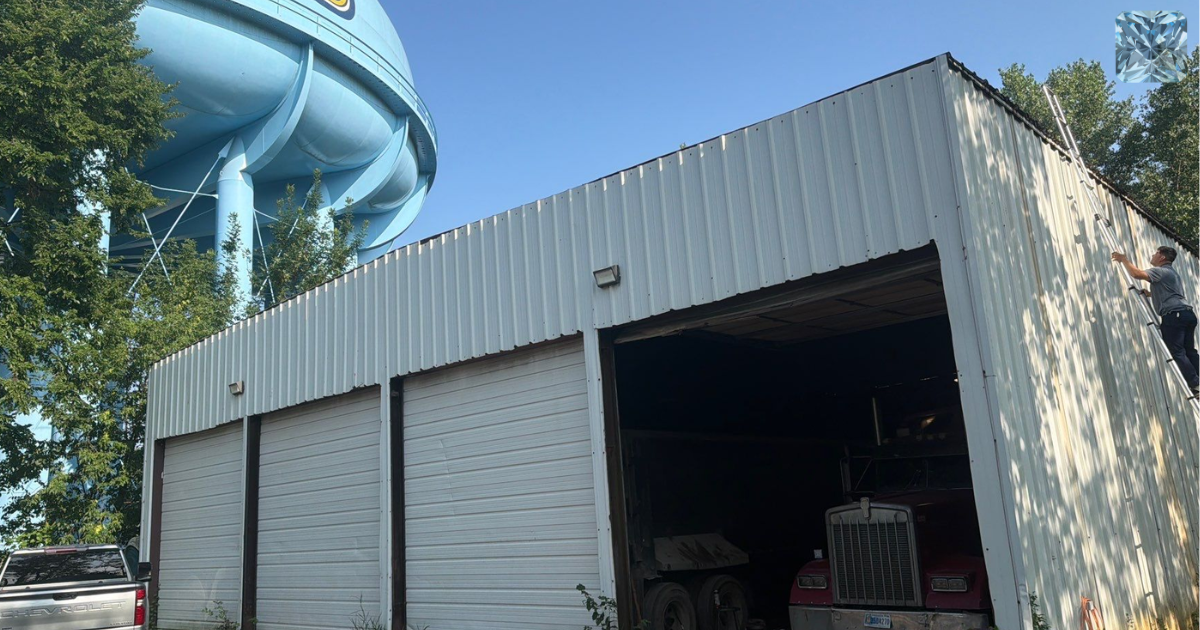
The SBA lending ceiling jumped to $10 million. The bar to qualify is a pulse, a 550 credit score, and one year in business.
Barely breathing.
Don't be allergic to paperwork.
Get more stuff done on the government's low-cost dime. SBA all the way.
Verified, SBA Policy Notice 5000-879058 doubled the combined 7(a) and 504 limit from $5 million to $10 million, effective July 4, 2026. It is the highest financing ceiling in the agency's history.
7 Key Takeaways
Seven facts. Read these and you already know the whole play.
🔲 The ceiling doubled. Effective July 4, 2026, the SBA raised its combined 7(a) and 504 limit from $5 million to $10 million, Policy Notice 5000-879058, the highest cap in agency history.
🔲 The bar sits on the floor. Common approval marks: $180,000 in annual revenue, 12 months in business, a 550 personal FICO. Checking eligibility is usually a soft pull. It does not scratch your credit.
🔲 Two lanes, one garage. The 7(a) lane is flexible money, equipment, working capital, expansion. The 504 lane funds long-life fixed assets, like a roof. Stack up to $5 million in each, at once.
🔲 It's not just the roof. The same money funds equipment, signage, parking lots, landscaping, build-outs, and expansion. The roof is simply the smartest first dollar, because it protects the rest.
🔲 Deferred maintenance charges interest without a contract. A roof never fails politely. It waits for the storm, then bills you for the roof plus everything the roof was supposed to keep dry.
🔲 Write it off faster. Under recent tax law, a qualifying commercial roof can often be expensed in year one under Section 179 instead of crawling down a 39-year schedule. Ask your CPA.
🔲Cash can be cheap again. Government-backed money runs single digits. If your fix returns faster than the note costs, you didn't spend, you arbitraged.
Snapshot, 60 Seconds of Sweetness
Short version: you probably qualify, the money got cheaper, and rebates plus a write-off shrink the real cost.
If you searched “how do I pay for a commercial roof,” here's the short answer: you probably already qualify, and the money got cheaper this month. The SBA doubled its ceiling to $10 million. Marketplaces approve at a 550 credit score and a year in business. Utility rebates and the federal energy deduction can cover a chunk of a reflective, better-insulated roof. A restoration, not a full tear-off, often does the job for far less. And a qualifying roof may be written off in year one instead of over 39.
The math is simple. If you can't turn borrowed capital faster than about 8%, the loan was never your problem — the operation is. But if you can, and most healthy businesses can, then a dry, bright, warrantied roof is one of the cleanest returns on your whole property. Grab your latest utility bill. Grab a photo of your roof. We'll do the math with you.
↓ Download the free Roof Funding Worksheet at CreativeRoofFunding.com
The Truth About “WE CAN'T AFFORD IT”
Ray has kept a bucket in the northwest corner of the warehouse for eleven years. He knows the smell before he sees the drip, that flat, gray smell of wet ceiling tile and old water, the one that hangs in the break room after a hard rain. He's mopped it, patched it, cursed it. He stopped asking about a new roof a long time ago, because the last time he asked, the answer was a tired look and the word later. Later became a religion.
If you're the one who signs the checks, this article is for you, but it isn't really about you. It's about Ray. It's about the person on your crew who has quietly decided the roof will never get fixed, that money only flows uphill, that the game is rigged for somebody else. Print this. Hand it to him in the break room. Because the thing that changed on July 4 gives him something he hasn't had in years: a reason to hope.
For years the excuse was honest. The money wasn't there. Rates were high. Banks were slow. So you slid a bucket under the drip and prayed for a dry August. That excuse just died.
On July 4, 2026, the Small Business Administration doubled its combined lending ceiling. Five million became ten. Highest cap in the agency's history. Fresh cash is flowing. Roll the paper printer.
You don't need to be a rocket scientist. You need a pulse, a year in business, and a 550 credit score. Read that again. That's not a country club. That's a screen door. So let's walk your building the way a lender would, and let's break every excuse Ray's been carrying.
Money Is Blood Flow
Capital is your business's blood, it has to keep moving, liquid and fast. Cheap money is circulation, not debt.
Think of money the way you think of blood. It has to keep moving. Sitting still, it does nothing. Flowing, it powers everything. Your capital is your business's lifeblood, it needs to be liquid and lightning fast.
Low-cost financing isn't debt for its own sake. It's circulation. It's what lets a healthy business push a fix through fast, before a small leak becomes a shut-down. You have limited time, limited energy, limited health, and a long list to get done. Cheap, fast capital is how you get more done with the life you've got. Blood that stops moving is a clot. Keep it moving.
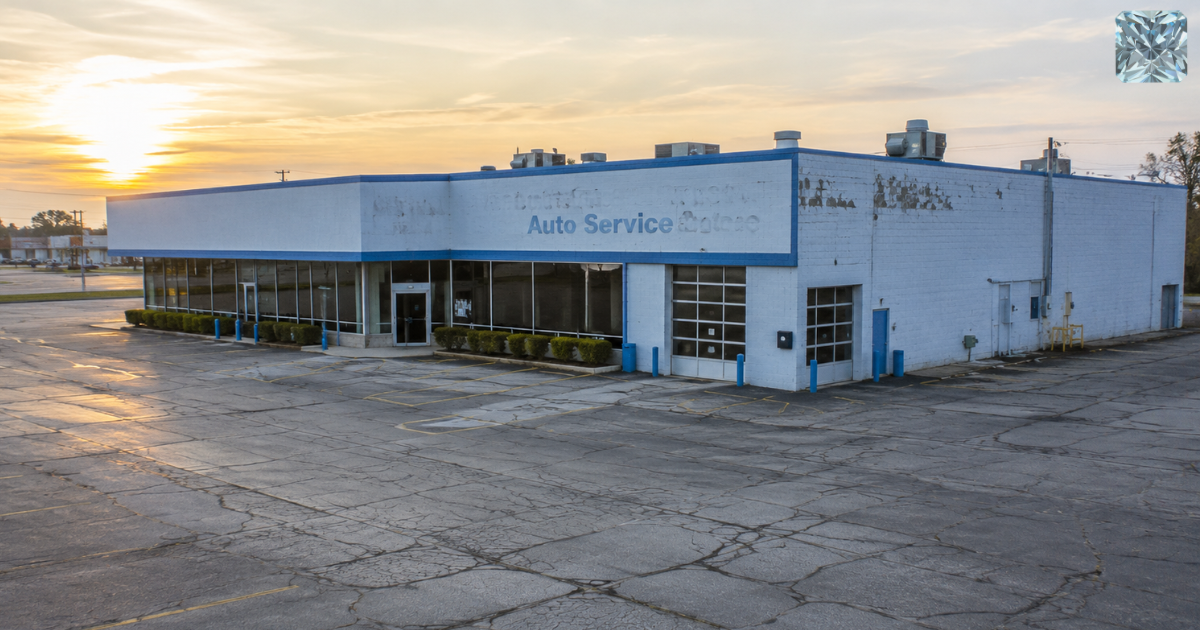
Walk Your Building Like a Lender
Stand in your lot and look up. Everything a lender sees is fixable this quarter, not someday.
Stand in your parking lot. Look up. A lender does the same thing. They see the alligator cracks in the asphalt. The sign nobody reads at forty miles an hour. The tired landscaping. And above all of it, the one asset protecting every other asset, the roof.
Here's the part that stings. Every one of those is fixable this quarter. Not someday. This quarter. The capital is sitting on the table. The only missing piece is the decision to reach for it, and the courage to let Ray believe it might actually happen.
The Roof Is the Highest-Return Dollar You're Ignoring
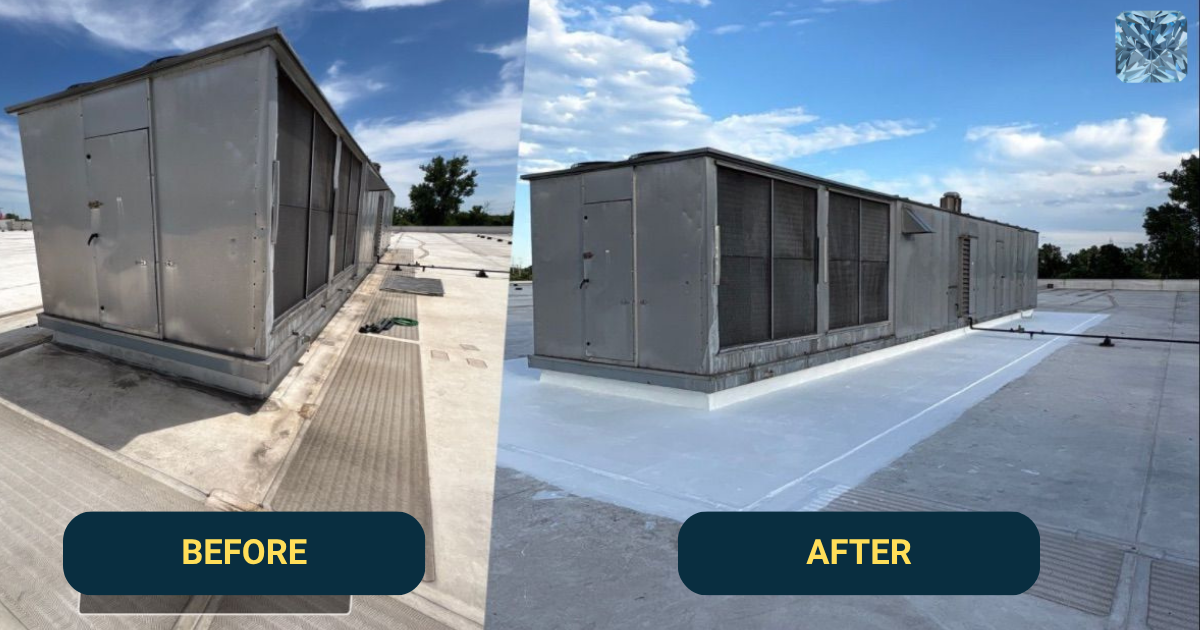
A roof never warns you, it just bills you. Restore a sound deck for a fraction of a tear-off, with a 25-year warranty.
A roof doesn't send warnings. It waits until it's raining on your inventory, your ceiling tile, your wiring, your customers. Then it hands you a bill. Defer it, and the number grows in the dark. It moves from “roof” to “roof plus drywall.” Then “plus product.” Then “plus the three days you were closed.” Deferred maintenance is the only line on your books that charges interest without a contract.
Here's the good news most owners never hear. On a sound deck, you usually don't need a tear-off. A liquid-applied restoration renews the surface, seals the weak spots, and buys years of service life, for a fraction of replacement cost, with less disruption. A FLEXION 2.0 system backs it with a 25-year / 300-month warranty. That's not a repair. That's a fixed asset. And fixed assets are exactly what a 504 loan was built to fund.
It's Not Just a Roof: CapEx, Infrastructure, and the Year-One Write-Off
SBA money funds the whole property, and a qualifying roof can be expensed in year one instead of over 39.
The roof is the smartest first dollar, but the same money reaches everything a lender saw in your lot. Repave the parking. Light the signage. Refresh the landscaping. Replace the equipment that keeps threatening to quit. Build the addition. This is infrastructure and CapEx, the bones of the business, and SBA financing was built for exactly this.
Now the part your CPA will love. For decades a commercial roof crawled down a 39-year depreciation schedule, a few thousand dollars of write-off a year while the roof did the heavy lifting today. Recent tax law changed that. A qualifying commercial roof, along with HVAC, fire protection, and security systems on a nonresidential building, can now be expensed under Section 179, often in the very year it's placed in service, up to generous limits. A 39-year trickle becomes a year-one deduction that frees cash to reinvest immediately. Bring the itemized invoice, the before-and-after photos, and the in-service date to your CPA, and watch them applaud your financial literacy.
Limits, eligibility, and timing depend on your situation and can change, this is general information, not tax advice. Your CPA runs your numbers. But knowing the door exists is half the battle, and most owners never knew it was there.
Two Spigots Most Owners Never Open
Open the free money first: a utility rebate for a reflective roof, and the 179D energy deduction for insulation.
Before you borrow a dollar, open the free money. First, your utility. A dark roof bakes. A bright, reflective roof throws the heat back at the sky and can cut cooling load by roughly a quarter. Many utilities pay rebates for that reduction. Snap a photo of your latest bill and we'll estimate what yours will contribute to the payback.
Second, the federal government. When you add insulation and tighten your building envelope, the Section 179D energy deduction can hand money back. Every time you make a building more efficient, the tax code wants to reward you. Most owners leave that reward on the table because nobody told them it existed. Stack a utility rebate and an energy deduction on top of cheap SBA money and a year-one write-off, and the real cost of your roof shrinks fast.
Creative Capital: It's About Leverage, Not Cash on Hand
Financing runs on leverage, not your checking balance. A sliver of assets across you and your family is collateral.
Here's where owners talk themselves out of it. “My cash flow's been tight.” “My checking account can't cover it.” Stop. Financing isn't about the cash in your account today. It's about leverage, what a bank can look at and feel safe. If you own a spectrum of assets, or even a sliver, between you and your family, that's collateral. One tight month at one business does not disqualify you when you own a piece of several.
We know an owner who runs six businesses. Real revenue, real assets, and one roof going rancid, black streaks, mildew, the whole sad picture. He almost didn't apply. He looked at one bad cash-flow month and told himself no before the bank ever could. Then somebody sat across the table and walked him through it. He didn't need cash on hand. He needed about ten thousand down and a little leverage across what he already owned. Three weeks later the crew was on the roof. The buckets went in the dumpster. And the businesses under that roof stopped bleeding.
That's the whole game. Not magic. Progress. Hope with a number attached.
Schools, Churches, and Nonprofits Have a Lane Too
Leaking sanctuary or classroom? Funds exist specifically for you, some with energy rebates and favorable terms.
If you run a school, a church, or a nonprofit, you're not locked out. Funds exist specifically for you, some offering energy rebates and favorable terms for exactly this kind of envelope upgrade. A leaking roof over a sanctuary or a classroom is still a roof, and the money to fix it is more reachable than you think.
The 8% Test
Run every project through Measurable, Desirable, Believable. Beat 8% and it's arbitrage, not spending.
Government-backed money is not payday money. It runs single digits. So run every project through one filter: will this return faster than it costs? Three quick gut-checks, Measurable, Desirable, Believable:
- Measurable. Can you put a number on the return? A dry building means no interior repairs, no ruined inventory, no emergency call-outs, lower insurance risk. Those are numbers.
- Desirable. Does the outcome move the business forward? Curb appeal that closes walk-ins. A sign that earns the drive-by. A roof that stops stealing your nights.
- Believable. Is the payback honest? If the fix pays for itself before the note matures, borrow. If it doesn't, don't.
If you can't turn borrowed capital faster than about 8%, the loan isn't the problem, the operation is. That's not an insult. It's a diagnostic. Clear that bar, and hesitating on the roof is leaving money on the table.
Price the Money Before You Take It
Fast money and cheap money aren't the same money. Ask the total dollar cost, not the monthly payment.
Speed is seductive. That's exactly where owners get hurt. Fast money and cheap money are not the same money. SBA and bank term loans are the cheap end — lower rates, longer terms, more paperwork, slower to close. Marketplaces and revenue-based financing are the fast end, approvals in hours, but the effective cost can run far higher, especially on short-term products.
Both have a place. A roof emergency in storm season is a different decision than a planned expansion you can underwrite over ninety days. Before you sign anything, ask for the total dollar cost of the capital, not just the monthly payment, and confirm there's no prepayment penalty. A straight lender hands you that number without blinking. If they dodge, walk.
Talk to your current lender or go shopping. Cash can be cheap again.
Where Do I Start? Who Do I Talk To?
Three doors, local branch, online marketplace, or your phone. Pick the one that fits you and walk through it.
You don't need a finance degree. You need one conversation. Here's where to have it.
- Your local branch. Community banks and credit unions that champion SBA lending will sit with you. In Highland, Centier's business team knows the SBA playbook. Peoples Bank has a reputation for caring about the owner across the desk. A good credit union will too. Ask for a business banker who's fluent in SBA, not a generalist whose SBA files gather dust. Skip the big impersonal national branches if you can; SBA is a relationship, and relationships beat call-center roulette.
- Online. Prefer to fill out paperwork at 11 p.m. in your pajamas? Shop online. Marketplaces let you submit once and see multiple offers on a soft pull that won't touch your credit. Just remember most marketplaces are brokers, not lenders, price every offer they surface against a straight bank quote.
- Your phone and Claude. Not sure who to trust? Put the offer in front of Claude and ask plainly: “Is this legitimate or a scam? What's the real cost? How could this fund my parking lot, my signage, my landscaping, my expansion, and my roof?” Then take the sharpened questions to a banker.
Three doors. Same room. The money's on the table in all three.
What to Fund First
Spend the first dollar where it protects the most. Envelope before addition.
- The roof and anything letting weather in. It guards everything else.
- Safety and code items that carry liability.
- Equipment whose failure would stop revenue cold.
- Curb appeal, signage, and landscaping, the cheapest marketing you'll ever buy.
- Expansion, once the building you already own is airtight.
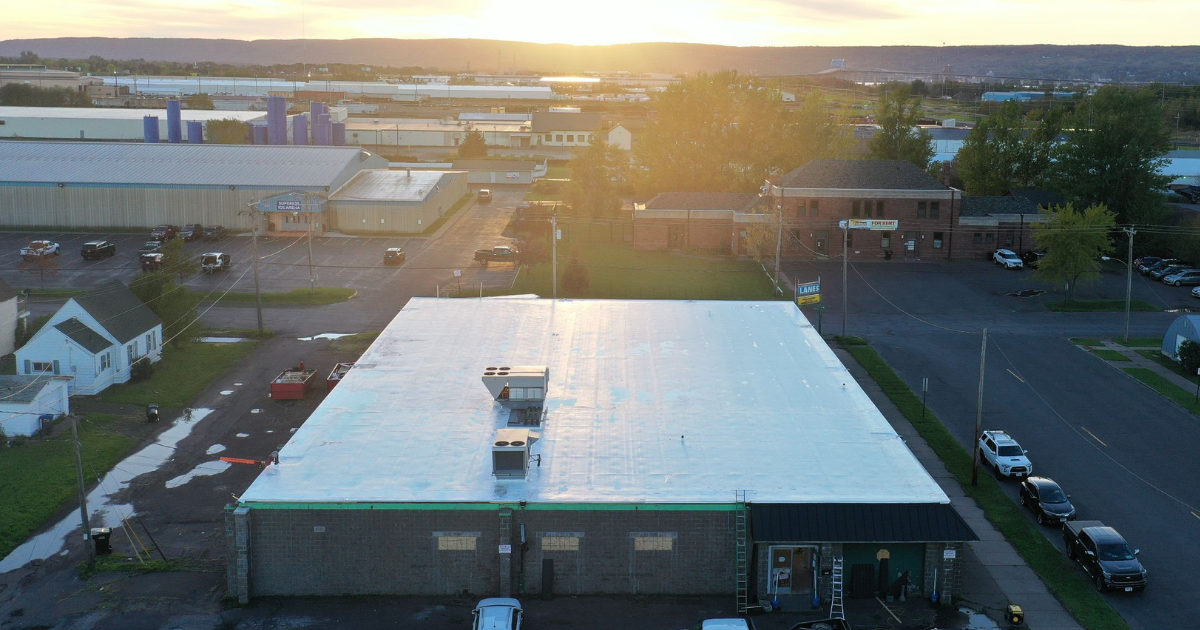
From Bucket to Breakthrough
The real return isn't only on the balance sheet. It's the exhale on the crew's faces when the game finally breaks their way.
Picture the day the finance person finally has the conversation. Not a cliff, a coffee and a form. A soft pull. A number that comes back smaller than the fear that guarded it. The relief is almost physical: a knot in the chest that's been there so long you forgot it was a knot, and then it isn't. That's the alleviation nobody puts on a spreadsheet.
Then the crew arrives. For a few days the building wears scaffolding like a splint. And on the first hard rain after, the storm that used to mean buckets and the flat gray smell of wet tile, Ray stands under the northwest corner with his coffee, waiting for the drip that doesn't come. Dry. Bright above him. He doesn't say much. He just breathes out.
That's the part the government program can't quite capture in a policy notice, and the part the maintenance crew needs to see: hope, restored. The quiet proof that the system isn't only rigged for somebody else, that hard work, a mostly-free economy, and a program that actually broke your way can still add up to a dry building and a paid-off note. You can keep your faith, keep your convictions, and still take the win. It's allowed. Take it.
Only About 4% Move, Be One of Them
This is the best window for a decade, and by our count only ~4% of local businesses qualify and act. Be one of them.
Here's the sober part. Washington is not going to hand out a higher volume of cheaper money again anytime soon, plan on this being the best window for a decade. And by our count, only about 4% of businesses in Lake County both qualify and have the nerve to walk through the door with their documents.
Think about that. The bar is a 550 credit score and a year in business. The money is government-backed and cheap. The write-off is immediate. And still, the overwhelming majority never have the conversation, not because they can't, but because a simple, slightly uncomfortable meeting feels bigger than it is. The owners who grow are the ones who keep the blood moving. Have the courage the other 96% won't. It's a conversation, not a cliff.
Frequently Answered Questions
Fast answers to the questions owners ask right before they pick up the phone.
Q: Do I really qualify with a 550 credit score?
A: Often, yes. Many marketplaces set the floor around a 550 FICO, $180,000 in annual revenue, and 12 months in business. A soft pull to check won't touch your score.
Q: My cash flow was negative a few months. Am I done?
A: Not necessarily. Lenders weigh leverage and collateral, not just last month's checking balance. Assets across your businesses, or your family, can be what makes a bank comfortable.
Q: Can I use SBA money for things besides a roof?
A: Yes. The 7(a) and 504 programs cover equipment, parking lots, signage, landscaping, build-outs, real estate, working capital, and expansion. The roof is just the smartest first dollar because it protects the rest.
Q: How do I write off the roof?
A: A qualifying commercial roof can often be expensed in year one under Section 179 instead of depreciating over 39 years. Bring itemized invoices, before-and-after photos, and the in-service date to your CPA. General information, not tax advice.
Q: Restore or replace?
A: If your deck is sound, a liquid-applied restoration usually wins on cost, speed, and disruption, and adds years of life with a 25-year / 300-month warranty. A failed deck is a different conversation. We'll tell you straight.
Q: Can rebates really cover part of it?
A: Often a meaningful part. A reflective roof can trim cooling load about 25% and earn a utility rebate, while added insulation can unlock the Section 179D energy deduction. Send a photo of your utility bill and we'll estimate yours.
Q: What's my first step, today?
A: Two photos. Your roof and your latest utility bill. That's enough for us to sketch the real number, rebates, deduction, and financing, before you ever call a lender.
The Bottom Line
The excuse died July 4. Open the free spigots, price the money, fix the envelope. Be one of the 4%.
The excuse died on July 4. The money is real, the bar is low, and the highest-return dollar on your property is the one that keeps the rain out. Sledgehammer your excuses. Open the free spigots first. Price the money. Then fix the roof, the lot, the sign, the landscaping, the equipment, in that order, starting with whatever is letting the weather in.
You've been given a building to steward, and people who work under it. Stewarding it well isn't pride, it's good work done faithfully, so the crew stays dry and the mission keeps moving. The tools are finally on the table. Pick them up. And when it's done, hand the good news to Ray.
Through wisdom is an house builded; and by understanding it is established: and by knowledge shall the chambers be filled with all precious and pleasant riches.
Grab the free Roof Funding Worksheet & Rebate Estimator at CreativeRoofFunding.com.
Send a photo of your roof and your latest utility bill, we'll calculate what the government and your utility will contribute before you call a single lender.
CreativeRoofFunding.com is an educational resource. We're roofing people, not your financial or tax advisor, confirm loan terms, rebates, and deductions with a qualified professional before you sign.